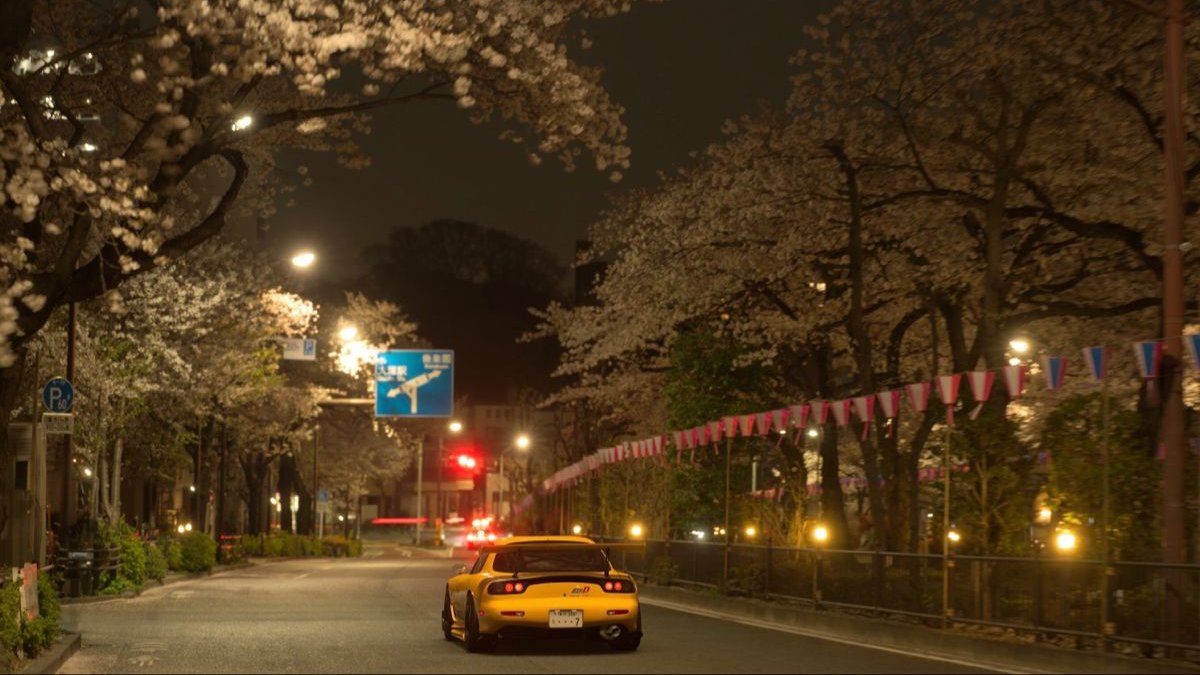
The story
The FD began when Mazda asked its engineers to work out what a sports car owes its driver, and the answer turned out to be less. The tiny 13B-REW was tucked low and aft of the front wheels, which let the designers drop the hood and pull the mass inside the wheelbase, and anything that could be lightened was, from the aluminum hood to the suspension arms. The result was a 1,265 kg (2,789 lb) coupe with 255 hp in US trim and a pair of sequential turbos, the second arriving around 4,500 rpm like a door kicked open.
Its shape, sketched in Mazda's California studio and refined in Hiroshima, is why most people know it, yet the drive is why owners keep them. Brakes, steering and shifter flow together, and smooth hands are rewarded with a rare sense of wearing the car. It was never easy company: the cabin is snug, the rotary is thirsty, and the plumbing under the hood punishes neglect. Exchange rates and a cooling economy cut its American career short, which only makes the survivors more precious. The RX-8 came next, but nothing truly replaced it.