The story
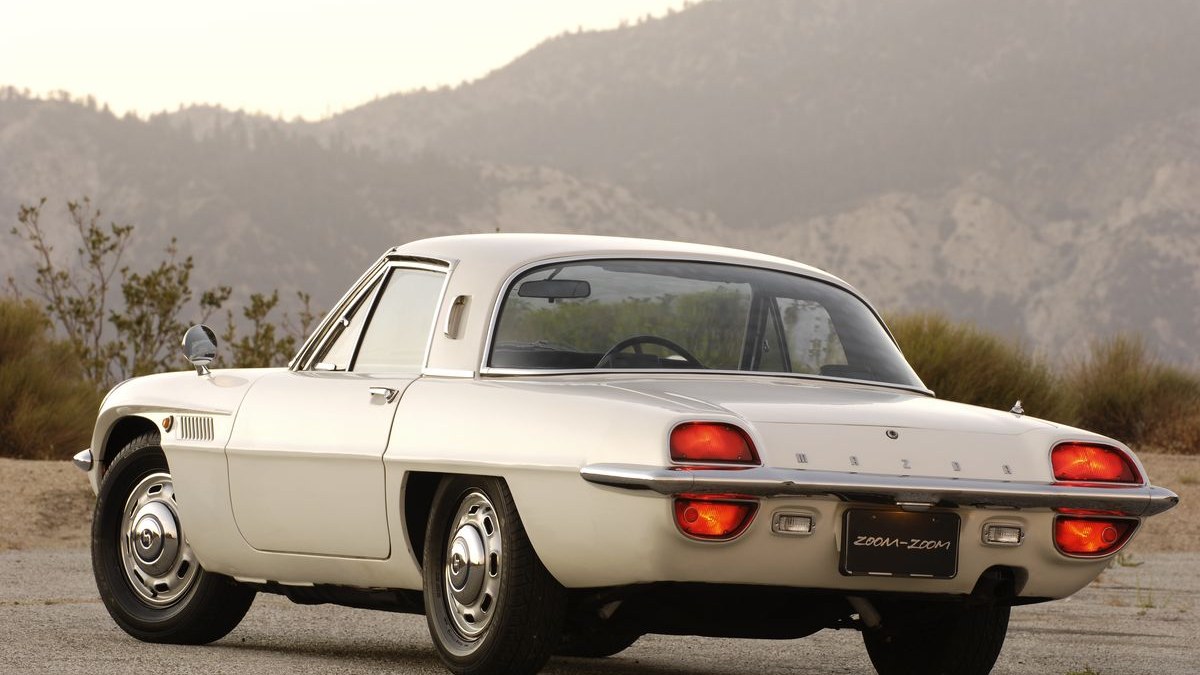
The Cosmo Sport existed to settle an argument. Mazda licensed the Wankel engine in 1961, then spent 6 years with a team of 47 engineers under Kenichi Yamamoto fighting the chatter marks that scarred rotor housings, until new apex seals finally beat them. The car built around the result looked ready for orbit, low and long with a tiny glasshouse, and its 982 cc twin-rotor made 110 PS (108 hp) while spinning eagerly toward 9,000 rpm. At about 940 kg (2,075 lb), it felt light and alert in a way few Japanese cars of the day could match.
Mazda never meant the Series I to sell in volume. It built about 30 a month, studied how owners used them, and fed the lessons into a longer, stronger Series II just over a year after launch. The short wheelbase and unassisted brakes ask for respect at speed, but on a winding road the smooth, wailing engine and light nose make it a delight. In 1968 a pair of Cosmos ran an 84-hour race at the Nürburgring, and one finished fourth overall. Every RX-7, the RX-8 and the Le Mans-winning 787B descend from these 343 cars.