The story
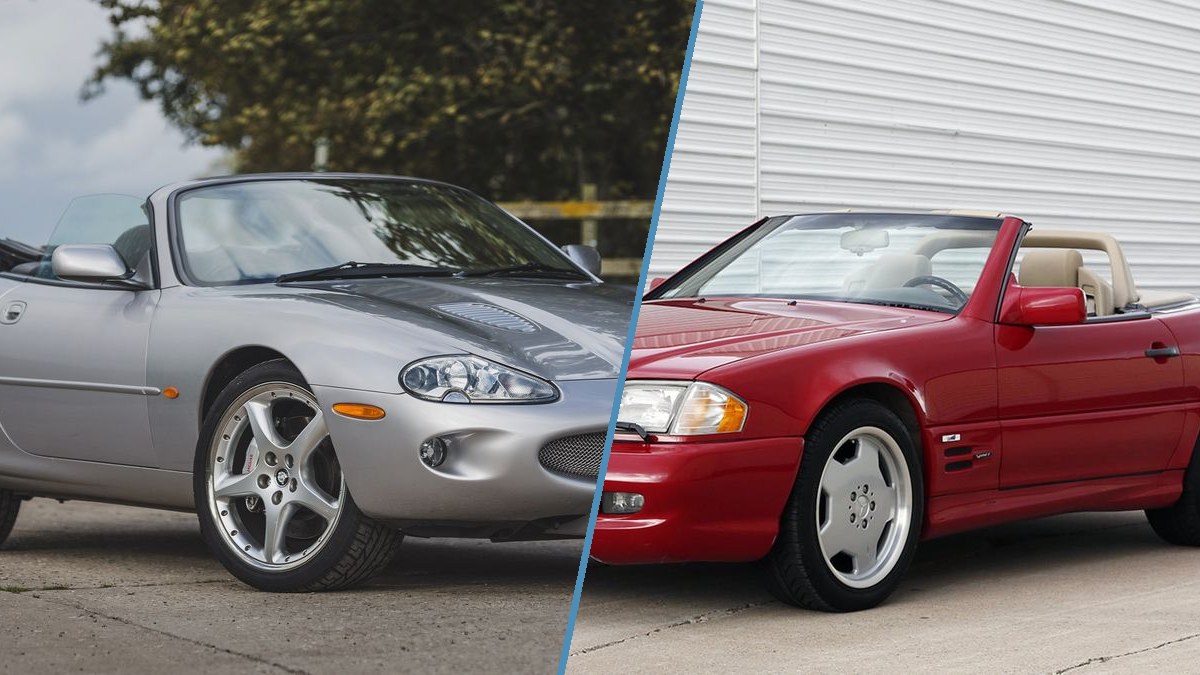
When the XK8 replaced the XJ-S in 1996, Geoff Lawson's design team looked straight back to the E-Type: a long hood, an oval grille, soft haunches, a low roof. In 1998 the XKR added an Eaton supercharger to the 4.0-liter AJ-V8, lifting output to 370 hp and 387 lb-ft, with a wire-mesh grille and hood louvers as the only giveaways. Car and Driver timed a coupe at 5.2 seconds to 60 mph, the top speed was limited to 155 mph, and adaptive damping came as standard.
On the road it is quick in a fluid, unhurried way, the blower delivering its shove from low revs with a faint whine and the chassis tuned for suppleness rather than bite. The cabin is all burl walnut and leather, the rear seats are best used for coats, and the driver sits higher than the low roofline suggests. Age has added known weak spots, chiefly timing-chain tensioners, Nikasil bores on the earliest engines, and rust in the steel body and subframe mounts. Beside a Mercedes SL500 it is the less rational choice. For plenty of buyers, that is exactly why they want one.