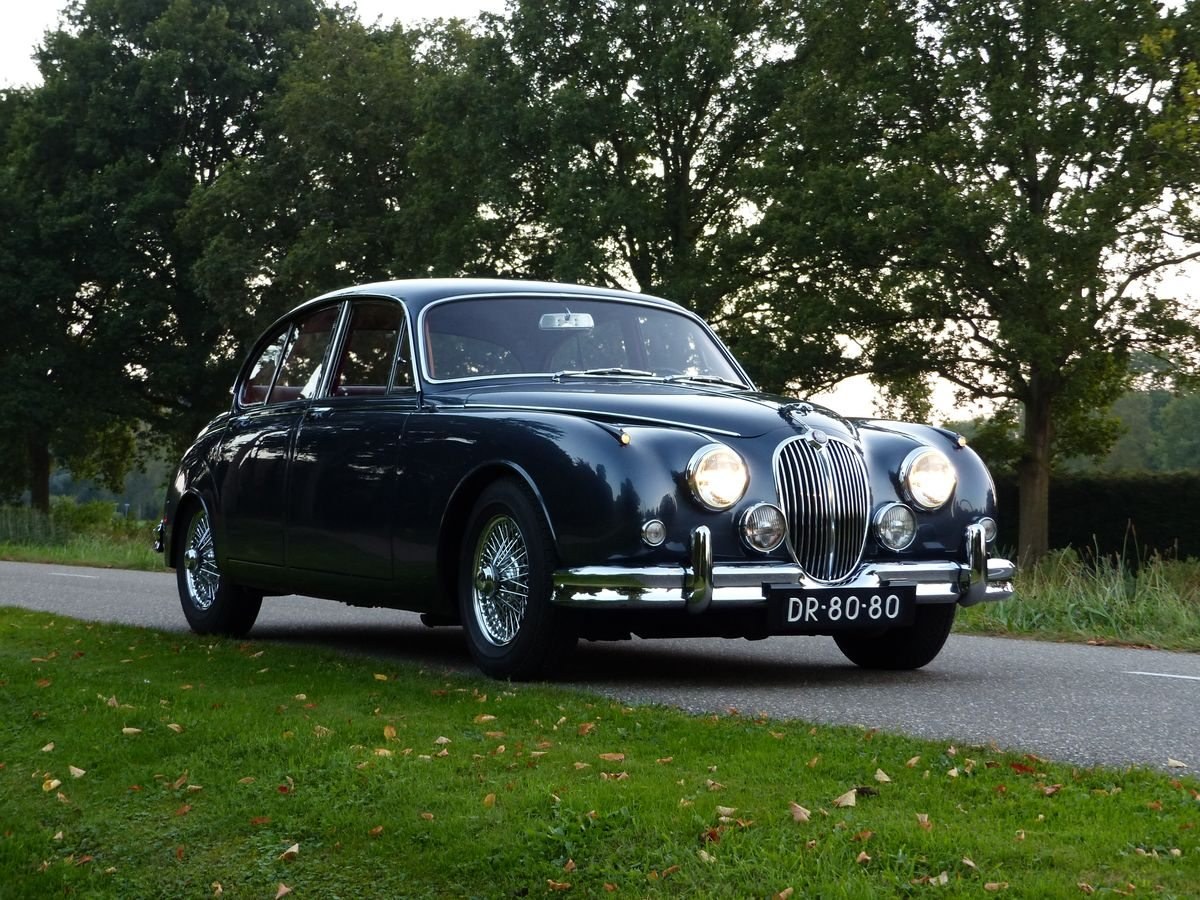
Jaguar Mark 2

Photo: Cjp24 / Wikimedia Commons, CC BY-SA 4.0

Jaguar · 1959–1967

Jaguar Mark 2

Also sold as Jaguar Mk II, Jaguar Mk2

—
Community scoreLoading…
Rate it

Jaguar's compact 1959 sedan put a Le Mans-bred twin-cam straight-6 behind a walnut dashboard and proved that a 4-door could keep pace with sports cars. The 3.8 could reach 125 mph, and executives, racing drivers, police forces and, awkwardly, the people the police were chasing all wanted one.

Four-door sedanRear-wheel drive4-speed manual with optional overdrive, or automatic

Made by Jaguar

In the numbers
Power
220hp
220 bhp gross, Jaguar's claim
Weight
1,525kg
3,362 lb
0–60 mph
—
Not on record
Top speed
125mph
Maker's claim
Built
83,701

Figures for the Jaguar Mark 2 3.8, 1959-1967. Sources are listed at the foot of the page.

The story

On paper the Mark 2 was a respectable family sedan: slim chrome window frames, leather chairs and enough burl walnut to panel a study. Underneath sat the XK straight-6 that had already won at Le Mans, disc brakes at all 4 wheels when most rivals still relied on drums and, in the 3.8, 220 hp with 240 lb-ft of torque. Nobody had blended manners and muscle quite like that before, and buyers noticed, taking 83,701 of them in 8 years. Racers strung together 20 consecutive wins in the British Saloon Car Championship, police forces put the car on traffic patrol, and Britain's robbers wanted one for exactly the same reasons.

By modern standards it is a handful. Without power assistance the steering is heavy at parking speeds, the early Moss gearbox demands patience, and the live rear axle lets the tail wander when the road gets wet and bumpy. That is part of the appeal. A Mark 2 rewards smooth hands and punishes clumsy ones, and in doing so it wrote the brief that every fast executive sedan since, the BMW M5 included, has followed.
The community verdict

Loading the score…

What's your verdict?

Loading…

From Carveyance

More from Jaguar

Where the numbers come from

Figures are for the Jaguar Mark 2 3.8, 1959-1967. Numbers come from the Carveyance stories about this car, which were checked when they were written, and where a story didn't give one, from the sources below. A dash means we haven't found a figure we trust.

Photo: Cjp24 / Wikimedia Commons, CC BY-SA 4.0

Spotted something wrong?

Tell us which number or fact, and where you saw the right one. We check every note.