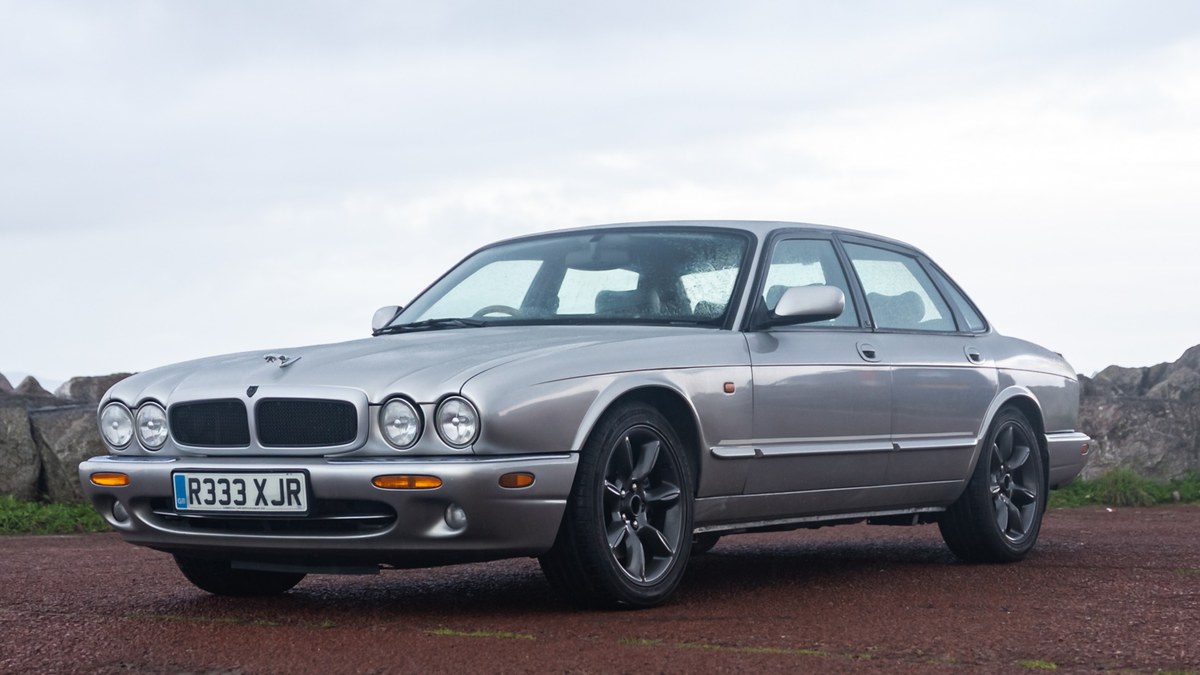
The story
Jaguar's 2003 XJ was a radical car in a conservative suit. Its monocoque was aluminum throughout, bonded and riveted using methods borrowed from aerospace, and the shell was about 40 percent lighter and 50 percent stiffer than the steel one before it. The XJR added a supercharged 4.2-liter V8 with 390 hp, a 6-speed ZF automatic and air springs at every corner. It was longer, taller and roomier than the X308 and still weighed less, at 1,791 kg (3,948 lb). Car and Driver timed one at 4.8 seconds to 60 mph, then drove it 40,000 miles and found it slightly quicker at the end.
Hardly anyone noticed. The styling stayed close to tradition, partly because Ford, which owned Jaguar, feared upsetting loyal buyers, and the 2007 facelift with its fake fender vents won few converts. The result is a car that conceals its ability almost completely. It rides with remarkable calm, steers like something smaller and asks only for a healthy air suspension in return. For a driver who wants pace without announcement, few sedans of its era do the job better.