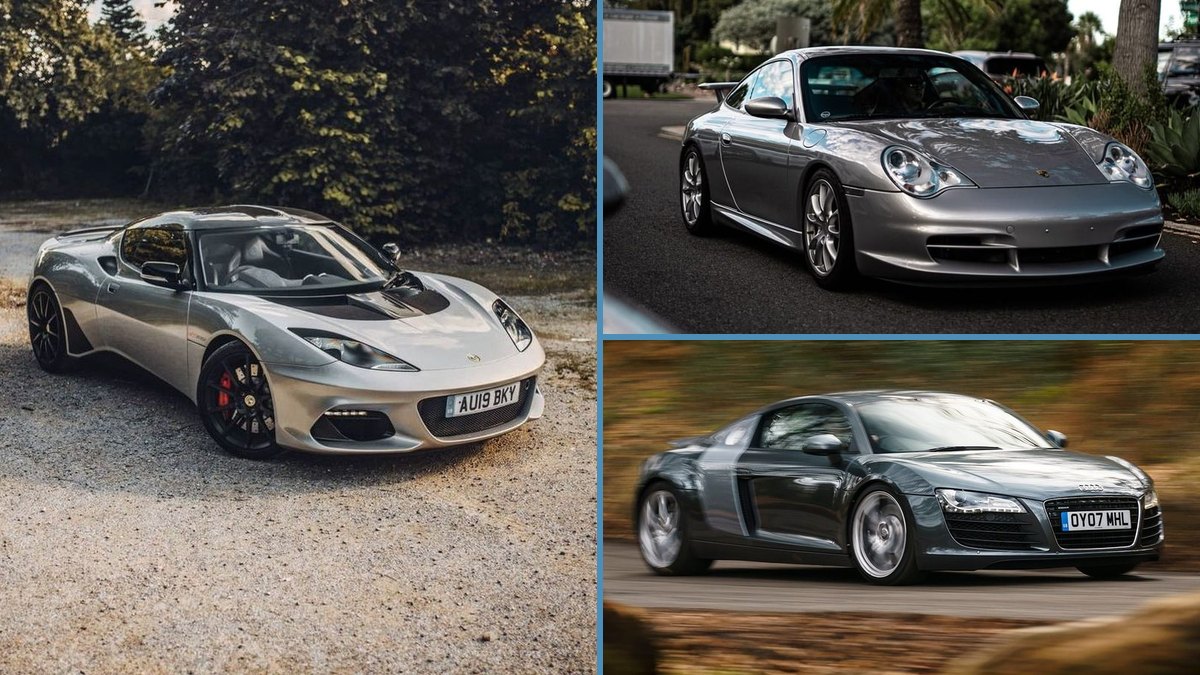
The story
By 2020 the Evora had spent more than a decade being refined, and the GT was the version Lotus sent to America to close out its run. The core recipe never wavered: a bonded-aluminum tub, a 3.5-liter Toyota V6 mounted behind the seats and fed by a supercharger, and a steering rack that kept hydraulic assistance long after rivals had switched to electric. Car and Driver weighed a test car fitted with lightweight options at 1,412 kg (3,112 lb) and timed it to 60 mph in 4.0 seconds, matching a 996 GT3 built 16 years earlier.
The stopwatch undersells it. What sticks with drivers is the running dialogue between the wheel, the front tires and the road, plus a chassis that settles into mild understeer mid-corner and rotates a little on exit once the tires are warm. Add air conditioning, a usable cabin and a ride that never batters its occupants, and it becomes a sports car that asks for effort without demanding suffering. It was also a goodbye. The Emira that followed is more polished, but the GT remains one of the last modern cars built around a manual gearbox and genuine steering feel.