The story
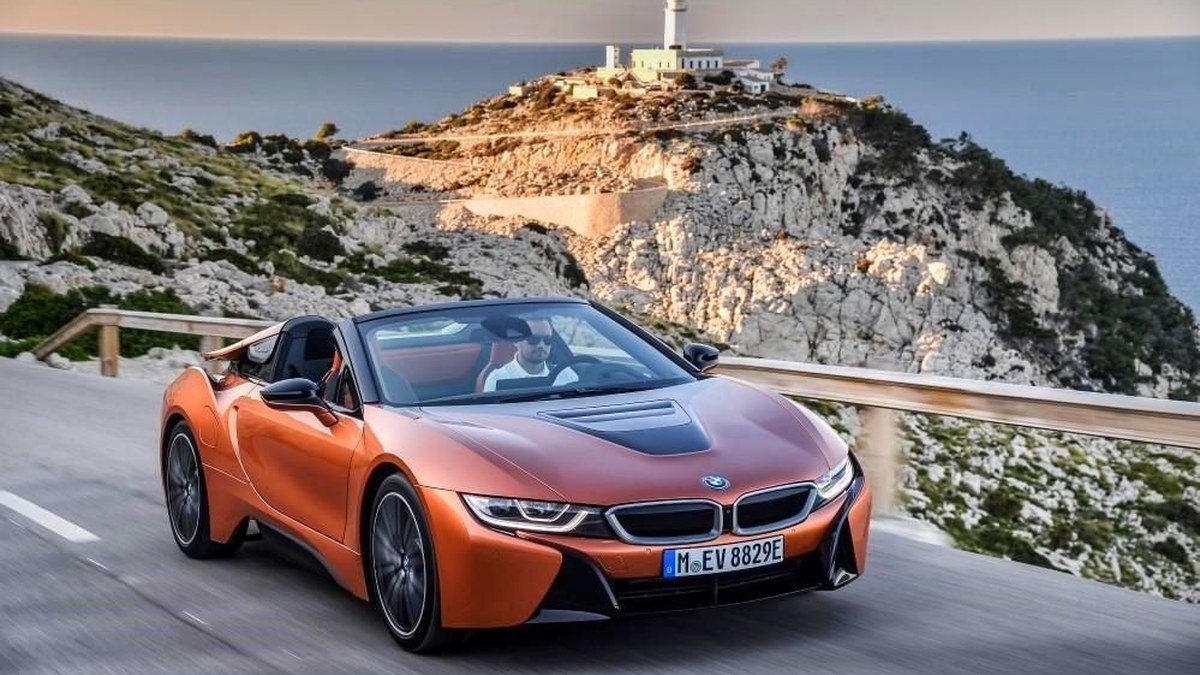
The i8 was BMW wagering that the sports car would survive by getting cleverer rather than louder. Its passenger cell is carbon-fiber reinforced plastic, bolted to an aluminum module holding the battery and 2 separate drivetrains: a turbocharged three-cylinder turning the rear wheels through a 6-speed automatic, and an electric motor driving the front wheels. Every dramatic detail has a job. The flying buttresses channel air, the upward-swinging doors clear a tall, wide sill, and the low stance comes from a battery laid in the floor.
Critics judged it as a supercar and marked it down. A 0-60 mph time of about 4.4 seconds is quick, but the shape suggested far more, the engine note was partly played through the speakers, and the electric range of later cars was only about 18 miles. Treat it as a city car and the verdict flips: silent arrivals, 369 hp on demand and a cabin that has dated gracefully. BMW built 20,465 between 2014 and 2020, only 3,884 of them Roadsters, and no rival has attempted a serious sequel.