BMW 507

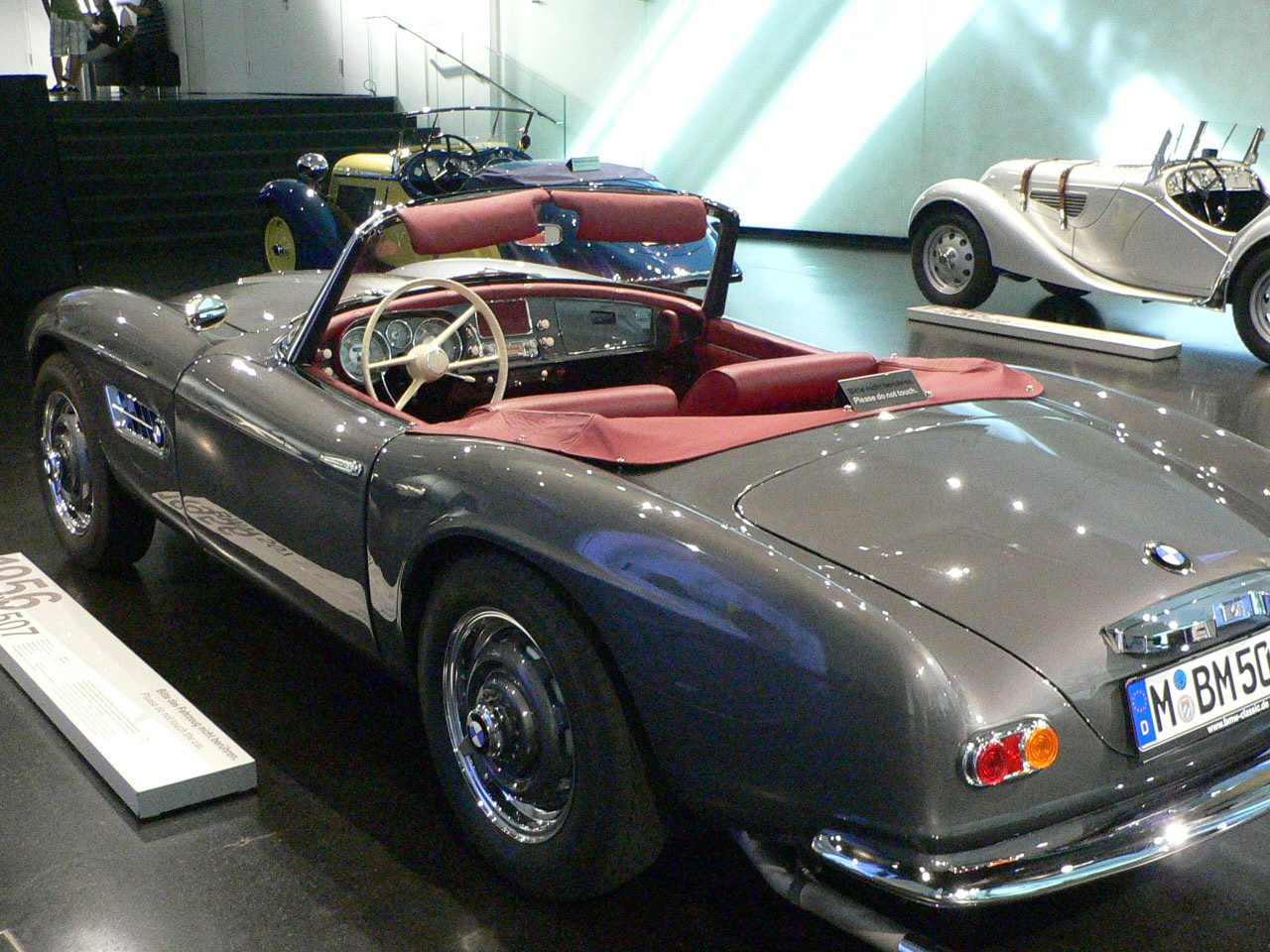
Photo: Alexander Migl / Wikimedia Commons, CC BY-SA 4.0

BMW · 1956–1959

BMW 507

—
Community scoreLoading…
Rate it

BMW's 1950s V8 roadster for wealthy Americans, drawn by Albrecht von Goertz and shaped by hand in aluminum. It cost far more to build than anyone planned and helped push BMW toward collapse, yet it became the most romantic car Munich has ever made.

Two-seat roadster (optional hardtop)Rear-wheel drive4-speed manual (ZF)

Made by BMW

In the numbers
Power
150hp
about 150 hp at 5,000 rpm
Weight
1,330kg
2,932 lb
0–60 mph
11.0sec
Road test
Top speed
124mph
Maker's claim
Built
252

Figures for the BMW 507, period specification. Sources are listed at the foot of the page.

The story

The 507 began as Max Hoffman's idea. The New York importer was convinced Americans would buy thousands of a glamorous German roadster priced below the Mercedes-Benz 300SL, and a BMW still struggling after the war agreed to build it. Goertz, an industrial designer who had never drawn an entire car, gave it a long, calm hood, slim kidneys and soft haunches that look as right today as they did in 1955. Under the hand-formed aluminum body sat a light-alloy 3.2-liter V8 and a 4-speed gearbox on a shortened sedan chassis.

It was never a sprinter. Period tests put 60 mph about 11 seconds away, and it behaved more like an elegant touring car than a racer, picking up speed with a warm V8 voice. The trouble was cost. Hand-beaten panels meant no 2 cars were quite identical, the price climbed toward 300SL territory, and only 252 were built before production stopped in 1959. Elvis Presley drove one, John Surtees kept his for life, and the 507 now ranks among the most coveted BMWs ever built, a sales disaster that matured into a legend.
The community verdict

Loading the score…

What's your verdict?

Loading…

From Carveyance

More from BMW

Where the numbers come from

Figures are for the BMW 507, period specification. Numbers come from the Carveyance stories about this car, which were checked when they were written, and where a story didn't give one, from the sources below. A dash means we haven't found a figure we trust.

Photo: Alexander Migl / Wikimedia Commons, CC BY-SA 4.0

Spotted something wrong?

Tell us which number or fact, and where you saw the right one. We check every note.